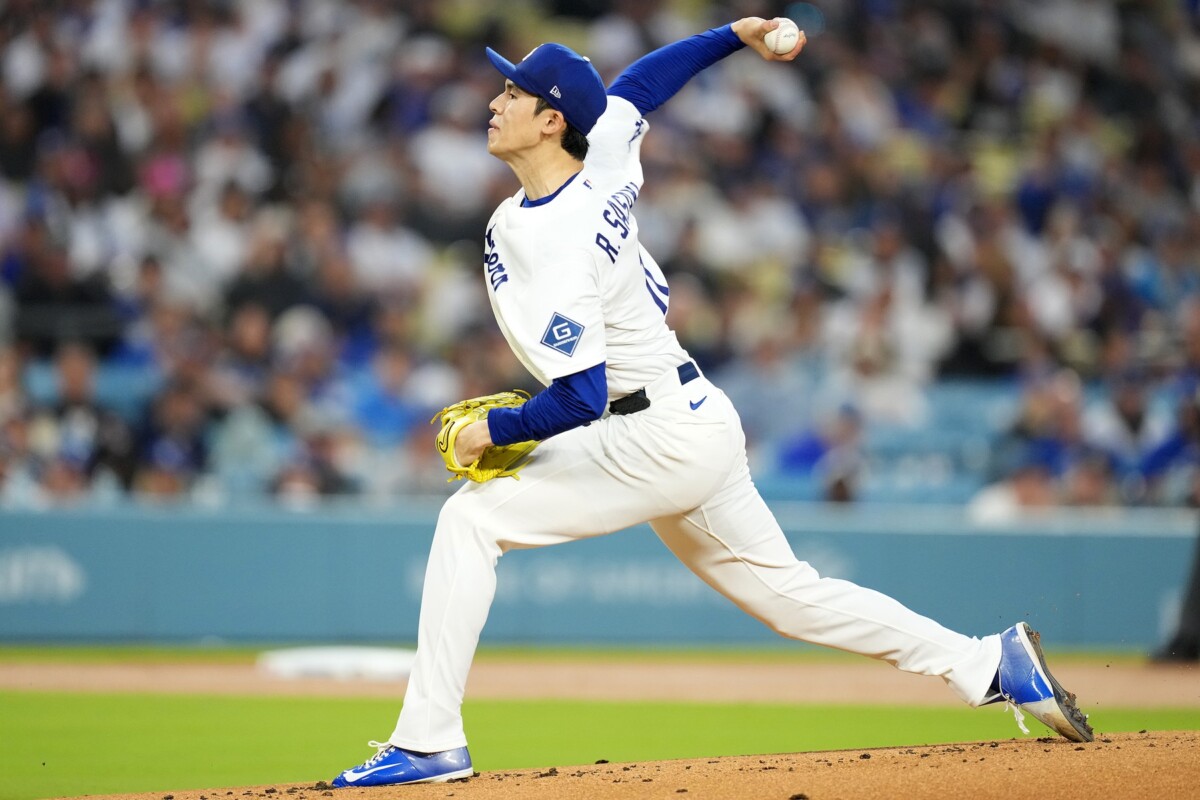
Los Angeles Dodgers pitcher Roki Sasaki gave up only one run in his first start of the 2026 season.
Sasaki, who had an uneven spring training, allowed one run in four innings of work.
He allowed four hits, including a single when facing one last batter in the top of the fifth inning, and struck out four while walking two batters.
Reliever Tanner Scott, however, didn’t allow that runner to make it home.
Of Sasaki’s 78 pitches, 45 were strikes, including nine whiffs. That total figure was a little below the 90-pitch limit imposed by manager Dave Roberts.
The Dodgers, however, provided no run support, and Sasaki left the game with his squad down 1-0.
How Has Roki Sasaki Been Playing in 2026?
Sasaki’s performance was a big step up from his outings in spring training.
He pitched 8.2 innings in the preseason, allowing 15 earned runs and walking 15 batters throughout his appearances. His ERA was an atrocious 15.58 in the preseason, though Monday’s performance resulted in a much improved ERA of 2.25.
That’s a lot closer to Sasaki’s dominant fall 2025.
After returning from that shoulder injury, Sasaki “become the team’s surprise closer in the playoffs, posting an 0.84 ERA in nine appearances with three saves and two holds,” as detailed by Jack Harris of The California Post.
What do the Dodgers Think of Roki Sasaki’s Performance?
Manager Dave Roberts has acknowledged Sasaki’s troubles, though he and general manager Brandon Gomes have both highlighted the young pitcher’s potential as well.
“I don’t think that you can completely bank on or evaluate spring training or an exhibition game. But yeah, it hasn’t been great,” Roberts said. “It really hasn’t. And we know that. The standard needs to be better. He knows that. We know that. And now, it’s kinda go time, and see how he can perform when the lights come on.”
Roberts has been checking in with Sasaki and publicly expressing confidence in the pitcher, as has Gomes.
“He’s done it on the biggest stage, in front of 50,000, so we know it’s in there,” Gomes said. “Now it’s just getting him in rhythm and consistently syncing up pitches.”