The Los Angeles Dodgers must decide whether to offer their breakout star, Andy Pages, a new contract.
Andy Pages’ amazing 2026 season
Pages made the 2026 All-Star team after a stellar regular season, starting extremely hot and leading the team in hitting.
As the season progressed, Pages’ production cooled but stabilized at an above-average level, while his defense remained stellar all year and earned him a Gold Glove nomination.
He finished the season slashing .274/.343/.468, with a 4.5 fWAR, 15 offensive rating points above average, and 10.3 defensive rating points above average.

It was his best season by far, and his overall production was more consistent than in 2025.
In the postseason, Pages took his biggest strides. He went 7-for-26 with two walks and four RBIs, becoming one of the few players to drive in runners with men on base.
His pitch recognition, plate discipline, and vision, all of which improved during the regular season, shone in the postseason.
Pages shook off the growing perception that he would struggle in October, and now few major questions remain when analyzing the outfielder.
As he enters arbitration for the first time, the Dodgers need to decide whether to give Pages an extension.
Why the Dodgers will consider an extension
At only 25, Pages is one of the youngest players on an admittedly old team, and his defense is a major asset.
His center field play can help offset some corner weaknesses, given his range and speed.
As such a well-rounded player, Pages’ arbitration figure will keep rising, and since he has unlocked Super Two arbitration, he gets four years rather than the standard three.
In 2027 alone, MLB Trade Rumors projects Pages to earn $4.9 million.
An offseason extension could buy him out for those four years, plus some of his free-agent years, keeping him locked in for the foreseeable future.
The Dodgers did something similar with Will Smith, extending him during his second arbitration year to a 10-year, $140 million deal.
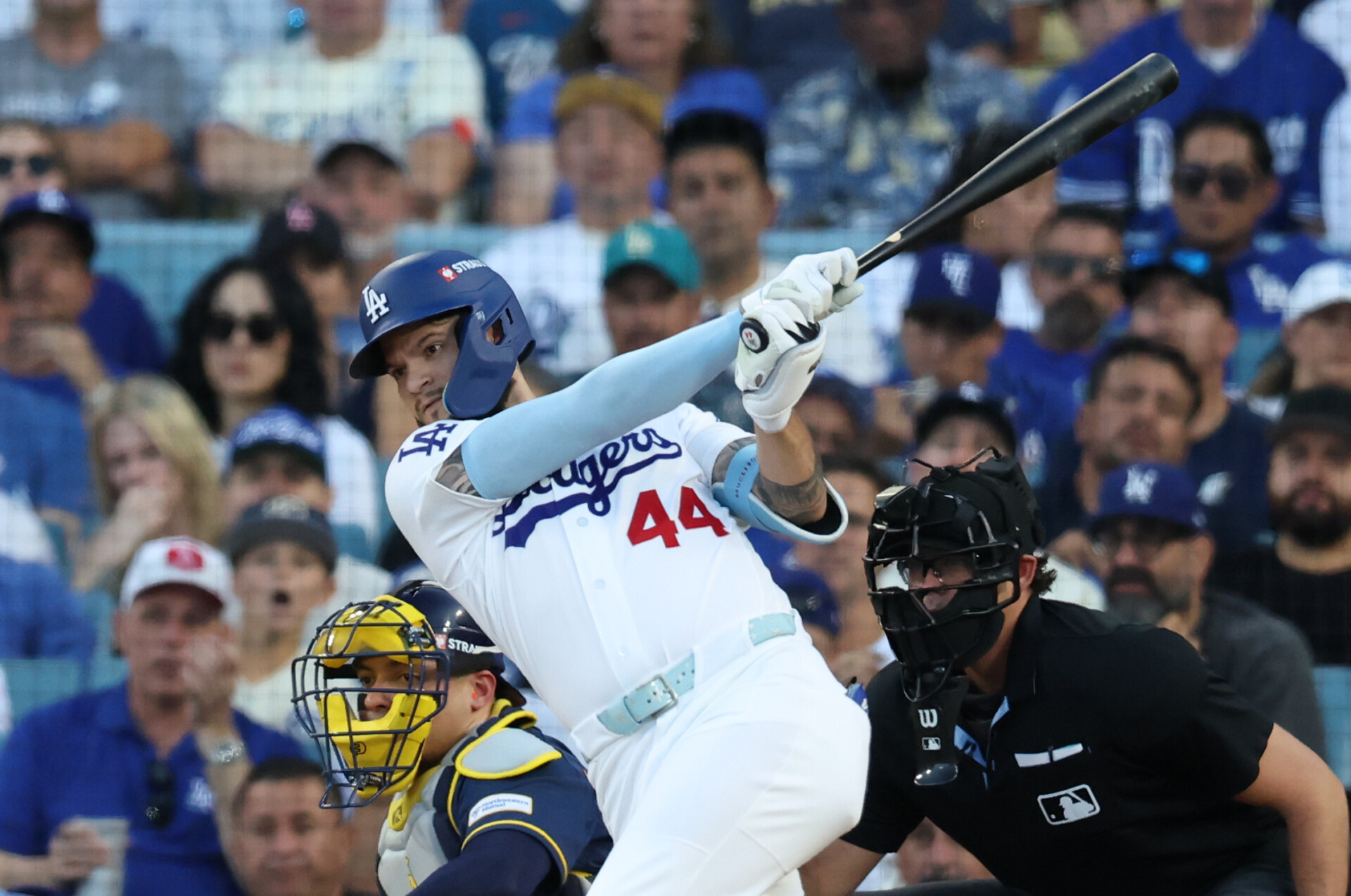
In the process, they bought out two years of arbitration and eight years of free agency.
Pages, with three years of arbitration left and entering free agency in his physical prime at 29, will cost a pretty penny as an outfielder with good contact skills and outfield defense.
A similar case is Pete Crow-Armstrong, who signed a six-year, $115 million contract this year.
The contract buys out all four of his arbitration years and two free-agent years. This deal came before his MVP-caliber season, which would have dramatically raised the deal’s value.
Uncertainty around the salary cap and what the next collective bargaining agreement could look like remains, but regardless, locking up Pages for a while may be smart business to avoid a serious rise in value, as the Cubs did.